Tracing Audit Protocols That Connect Game Developer Standards With Mobile Payment Options and Initial Reward Access Pathways
Erik Walter · Nov 1, 2026
Tracing Audit Protocols That Connect Game Developer Standards With Mobile Payment Options and Initial Reward Access Pathways
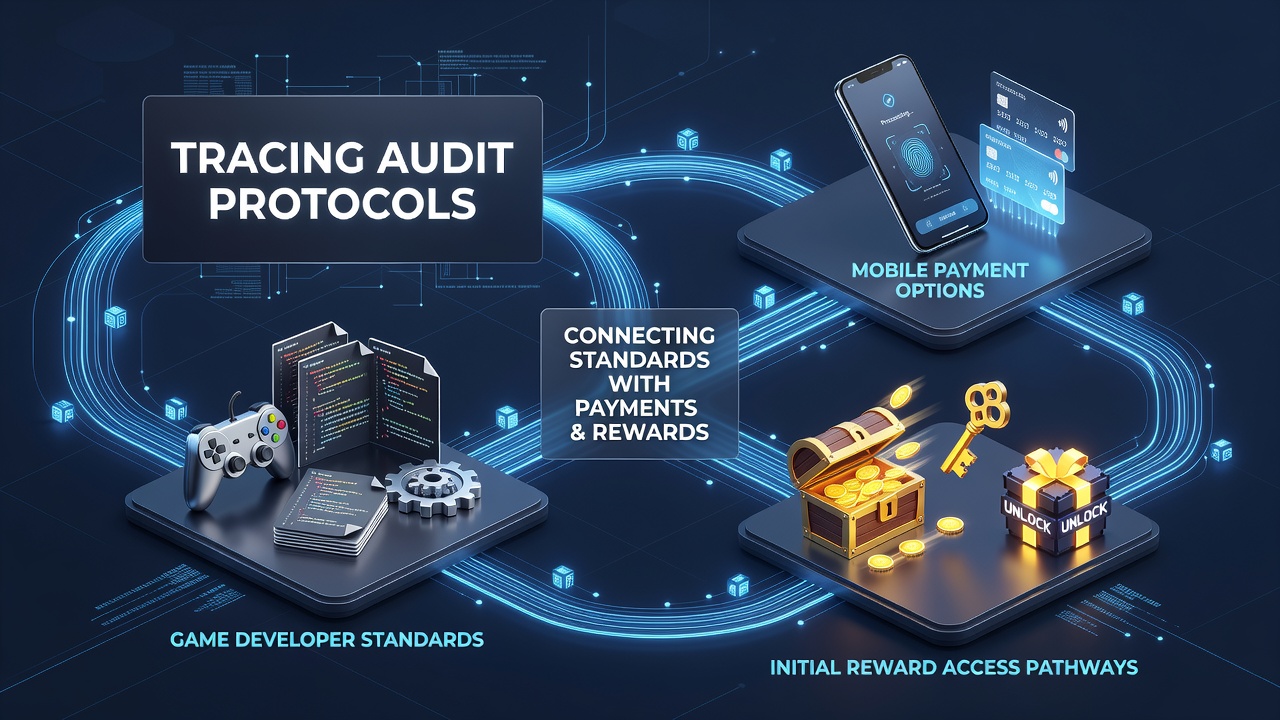
Game developer standards establish baseline requirements for code integrity, security features, and compliance markers that auditors track across mobile platforms, and these markers directly influence how payment gateways validate transactions while determining when users first access reward mechanisms. Audit protocols function as verification chains that start with developer submissions and extend through payment processor checks before reaching initial reward distribution points.
Core Components of Developer Standards in Mobile Environments
Developers submit software builds that meet specific technical benchmarks for randomness, data encryption, and user authentication, while certification bodies review these elements against documented criteria that include payout rate calculations and session logging requirements. Research from industry groups shows that standardized testing protocols reduce discrepancies between reported game mechanics and actual performance by measurable margins, and this consistency carries forward when platforms integrate payment options.
Standards often reference frameworks established by organizations such as the Gaming Standards Association, which publishes technical specifications used in multiple jurisdictions. Those specifications cover areas like game outcome certification and interface security, and auditors apply them uniformly when examining mobile titles destined for regional app stores.
Payment Network Verification Steps
Mobile payment options undergo separate audits that confirm transaction encryption, fund segregation, and reconciliation procedures before any linkage to game libraries occurs. Payment processors submit compliance documentation that auditors cross-reference against developer standards to ensure seamless handoffs between account funding and in-game activity.
Figures from regulatory reports indicate that integrated audit trails now capture timestamped events from payment initiation through reward eligibility checks, and this data flow helps identify mismatches early. In November 2026, several testing labs reported expanded scope for these combined reviews, incorporating real-time monitoring tools that flag anomalies during high-volume transaction periods.

One documented process involves hashing game identifiers at the developer stage and then matching those hashes against payment authorization tokens, which prevents unauthorized reward claims. Observers note that this matching step occurs before any initial reward access pathway activates, thereby maintaining separation between verified funds and promotional credits.
Initial Reward Access Pathway Controls
Reward pathways trigger only after both developer and payment audits confirm alignment on user identity verification adn transaction completion status. Protocols require sequential checks that begin with account creation data and progress through payment confirmation before unlocking entry-level rewards such as free spins or bonus credits.
Studies conducted by independent research institutions have mapped these pathways and found that audit logs typically retain records for a minimum of twelve months, allowing retrospective analysis if discrepancies arise later. The European Gaming and Betting Association maintains resources on these practices that detail regional variations in record retention rules.
Auditors trace reward eligibility back to the originating game build and the associated payment record, using unique transaction identifiers that persist across systems. This traceability supports compliance with rules set by bodies including the Nevada Gaming Control Board, which oversees certain cross-border mobile operations.
Integration Challenges and Protocol Adjustments
Connecting developer standards to payment systems and reward pathways requires coordinated updates whenever one component changes, such as a new encryption standard or revised payout verification method. Testing labs run parallel simulations to verify that changes in one area do not disrupt downstream access controls.
Data compiled by academic researchers at several universities demonstrates that multi-stage audit protocols lower the incidence of reward pathway failures by aligning developer output with payment processor capabilities before deployment. These studies track metrics across hundreds of mobile titles released in recent years.
Protocol adjustments in late 2026 incorporated additional checks for regional payment method compatibility, ensuring that initial reward access remains consistent regardless of the funding source selected by users.
Conclusion
Audit protocols continue to evolve as connectors between game developer standards, mobile payment options, and initial reward access pathways, with verification steps applied at each transition point. Documentation from regulatory and industry sources confirms that these layered checks produce traceable records that support ongoing compliance monitoring across mobile gaming ecosystems.